Launch Day, and the Company Underneath It
Everything comes down to today. FlashFX is open, complete and usable by anyone. The same day, it stopped being a person with a project and became a company, which turns out to be a much more paperwork-shaped thing than anyone tells you.
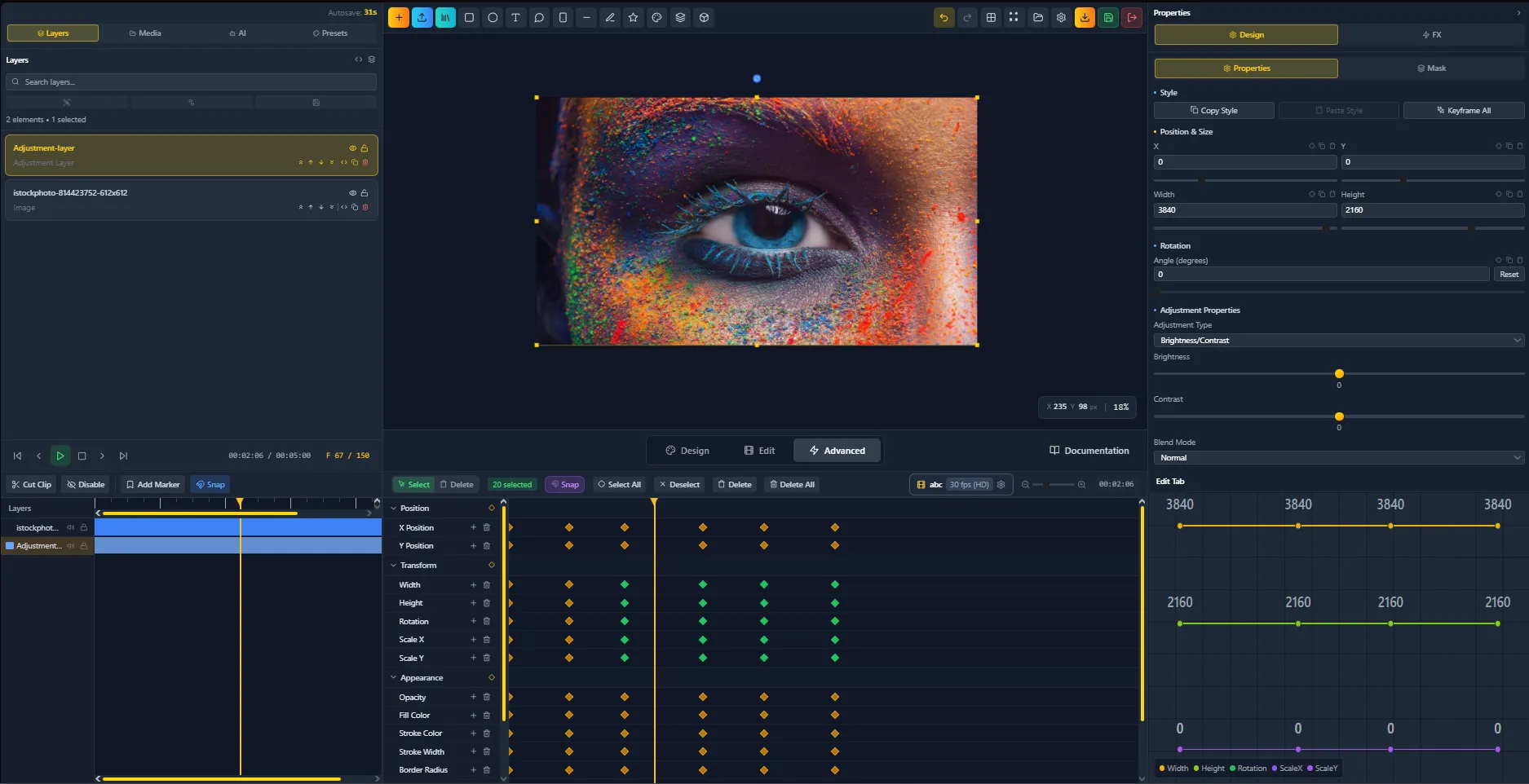
Everything comes down to today. FlashFX is open to the public, and it is finished in the sense that matters: you can sign up, open it, and do the whole job inside it without hitting a wall where the feature you need was on a roadmap.
That is the difference I would draw against every earlier release. Things have shipped before. v1.0 went out last November and people used it. But there was always a sentence attached: this part is coming, this works but not with that. Today there is no sentence. The product is the product.
The six weeks before this
I am not going to relitigate them here, because they have their own issue. In short, from late June to the first week of August I drifted: thirteen hours a day on my phone, tasks going untracked, six weeks of runway spent on nothing, against a launch date that was never going to move. It broke on 5 August, two days ago.
If you want the honest version of that, with the causes named and the recovery described as the slow, unremarkable thing it actually was, it is in My Worst Setback Was Also My Mildest. It is the more useful of these two issues. This one is the good news; that one is the part that explains why the good news was nearly late.
The part that is not the product
Here is what nobody mentions in a launch post. The largest thing that changed today is not in the app at all. It is that there is now a company.
Until this morning FlashFX was, legally, me. Every user, every euro, every liability landed on a seventeen-year-old with a laptop. From today it is an S.r.l. (società a responsabilità limitata), which is the Italian limited-liability company, and the form basically every small and mid-sized Italian business takes.
What an S.r.l. actually is
The whole point is in the name. Liability is limited: the company is a separate legal person from the people who own it, and a shareholder’s exposure stops at what they put in. If the company owes money, the company owes it. That separation is the entire product an S.r.l. sells you, and it is worth more than it sounds when the thing you are running has thousands of users on it.
The ownership is divided into quote (quotas) rather than shares in the tradeable sense, and they do not trade freely; moving one is a notarised act, not a transaction. That is deliberate. An S.r.l. is built for companies whose owners are meant to know each other.
Two versions of it
There are two ways in, and the difference is mostly capital.
The ordinary S.r.l. takes a minimum share capital of €10,000. You get a statute you can write yourself, which means you can decide how governance works, how quotas move, and what happens if someone wants out.
The S.r.l.s. (semplificata) exists so that the capital requirement stops being the reason a company does not exist. Capital can be anything from €1 to €9,999.99, and it must be paid in cash, in full, at incorporation. Shareholders have to be natural persons, not other companies. In exchange for that, the notary’s fee and the stamp and registration duties on the incorporation deed are waived, which is a real saving. The catch is the statute: you take the standard one written by the legislator, and you do not amend the core of it.
What incorporating involves
Either way, the shape is the same:
- A notarial deed. An Italian notary draws up the atto costitutivo and the statuto, and the founders sign in front of them. This is not optional and there is no online path around it: the notary is the checkpoint the whole system is built on.
- Registration in the Registro delle Imprese, the business register held by the Chamber of Commerce. Registration tax runs roughly €150–400 depending on the capital, and there is an annual Chamber fee of about €90.
- A tax identity. Partita IVA for VAT, a PEC (certified email, which is legally equivalent to registered post in Italy), and enrolment in the electronic invoicing system, because paper invoices between businesses are simply not a thing here any more.
What it costs to run
The company pays IRES at 24% on its taxable income, plus IRAP, the regional production tax, ordinarily 3.9% for a company of this type; regions can move that, up to 4.82%. Together, call it roughly 28% before anything else.
Then there is the standing cost of merely existing: the accountant, the annual filings, the Chamber fee, the PEC. An Italian company is not expensive to keep, but it is never free, and it does not care whether you had revenue this year.
What it cost me: over €5,000
Not on the product. On being allowed to sell it.
A business advisor. The single largest line, and the one I resented most before I understood what it was for. Italian company law is not a thing you read your way into over a weekend, and doing it wrong is expensive in a way that is not obvious until much later.
Termly, and compliance generally. Privacy policy, terms of service, cookie consent: every document a product with users in Europe has to have, and that I could not write myself in a form that would survive being looked at.
Subscriptions. The stack a company needs before it has revenue: the tools, the infrastructure, the services that quietly annualise into four figures while you are thinking about features.
The formation costs themselves, on top of all of it.
Over five thousand euros, and not one of those euros made the product better. That is the honest accounting, and I am writing it down because two years ago I would have flatly refused to believe the number. When I lost my first project I was out €200 borrowed from my cousin, and that felt like the end of the world. The distance between those two figures is most of what has changed.
The part I am seventeen for
Worth stating plainly, because it is the one place where my age stops being a headline and becomes paperwork.
Under Italian law a minor can hold a stake in a company, but it is treated as an act of extraordinary administration: it needs authorisation from the giudice tutelare and a legal representative acting for them. A minor cannot be a director. None of that is a problem to be solved with effort or with a better pitch; it is simply the rule, and it applies to me until December.
I mention it because “17-year-old founder” is a nice line and the reality of it is a folder of documents that other people had to sign.
Today
Two years, four rebuilds, €400 of borrowed money in the early ones and €5,000 of real money in this one, one hackathon lost, one co-founder gone, and six weeks I would rather have back. Against that: it is open, it works, and there is a company behind it.
That is the whole update. I will write about what the first week actually looked like once there is a first week to write about.
More like this, by email
What I am building, what broke, and what it cost. Written from inside FlashFX, sent when there is something worth saying.
No schedule, no filler. Unsubscribe in one click.