Testing Code Your Dev Environment Cannot Run
You cannot run it, so you cannot test it, so you ship it and hope. That is the trap, and the way out is smaller than it looks.
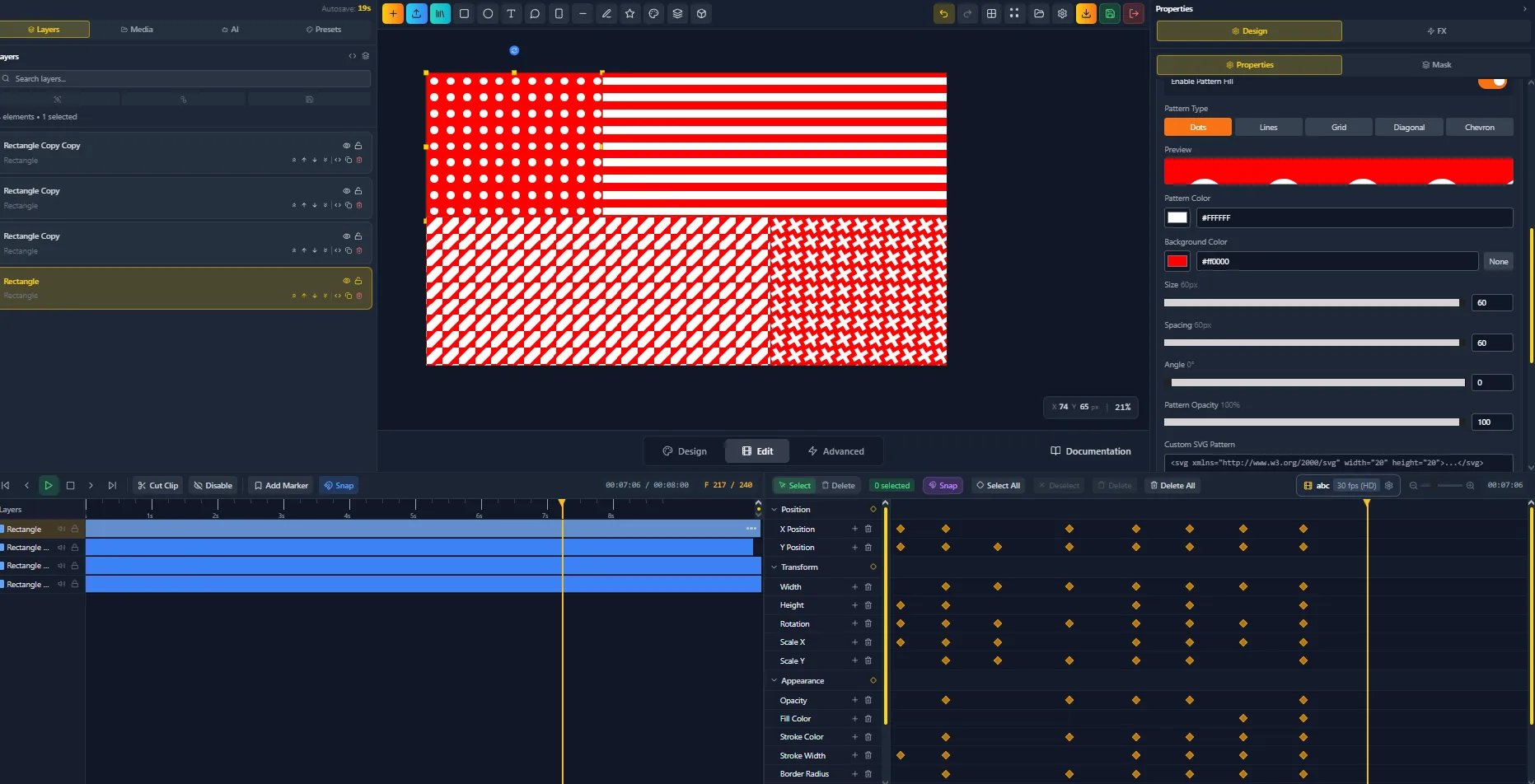
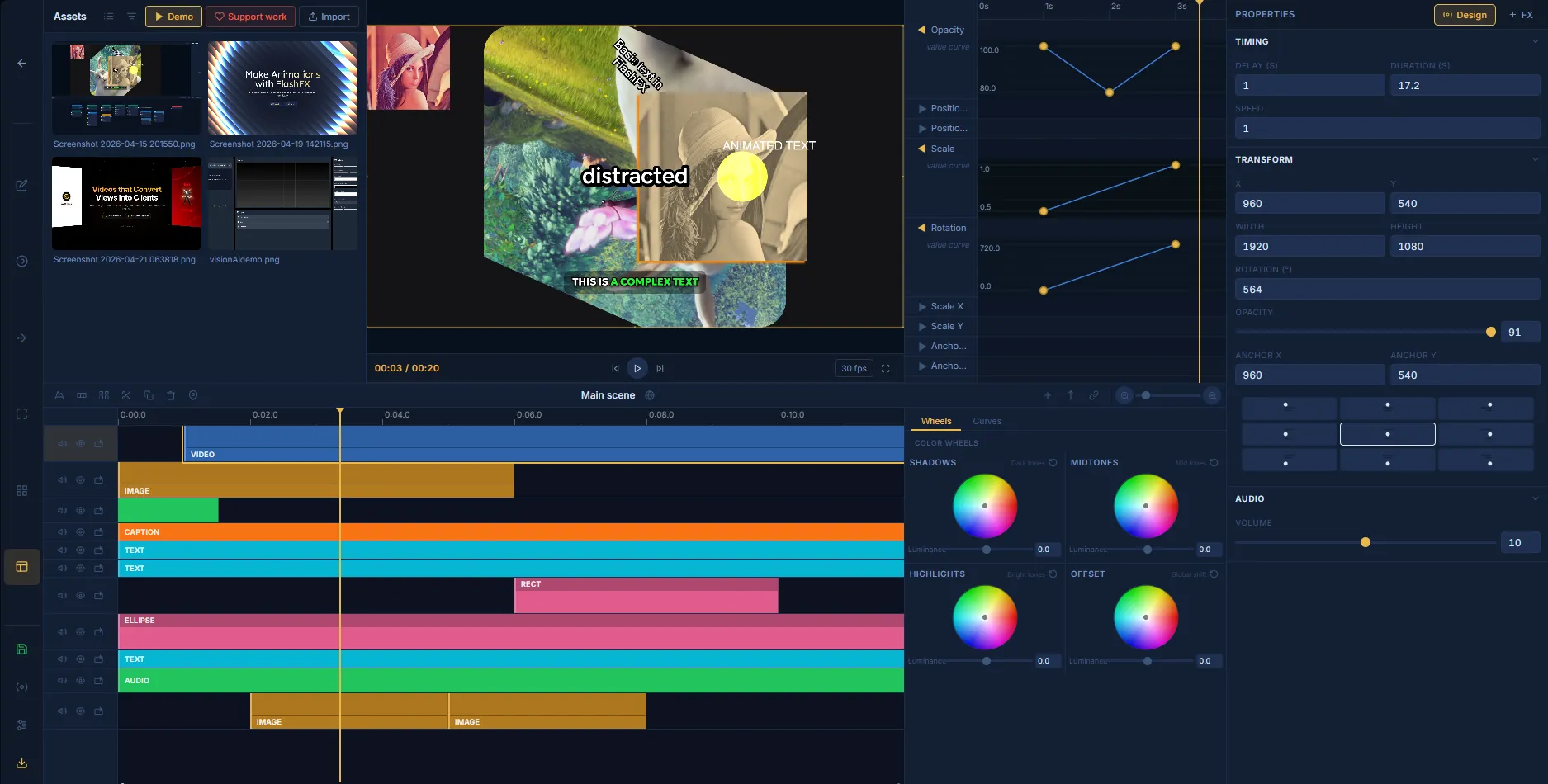
Audio-synced playback is the kind of feature that either works or is embarrassing. There is no middle state. Twenty milliseconds of drift and everybody feels it even if nobody can name it.
It is also, in my setup, completely untestable. Where I develop there is no WebAudio, no WebCodecs, no WebGPU. Not “flaky in CI” untestable — the APIs are simply not there.
The trap
The obvious response is to write the feature, push it, open the app, and look at it. Then change something, push, look again. I have built things this way and it is miserable. Every iteration costs a full round trip, you cannot check edge cases, and you end up asserting correctness with your eyes on a case you happened to try.
For sync work specifically that is hopeless. “Does the audio lead the video” is not something you can eyeball reliably at 40ms.
What I did instead
The realisation is that almost none of the hard part actually needs the browser.
A clock that maps wall time to composition time is arithmetic. Choosing which
frame should be on screen at a given time is arithmetic. Deciding when a buffer
should be scheduled, at what offset, with what rate — arithmetic. None of it
needs an AudioContext. It just happened to be written inside things that did.
So I pulled the math out into pure functions. No context, no decoder, no canvas. Inputs in, numbers out. Then I proved those in Node.
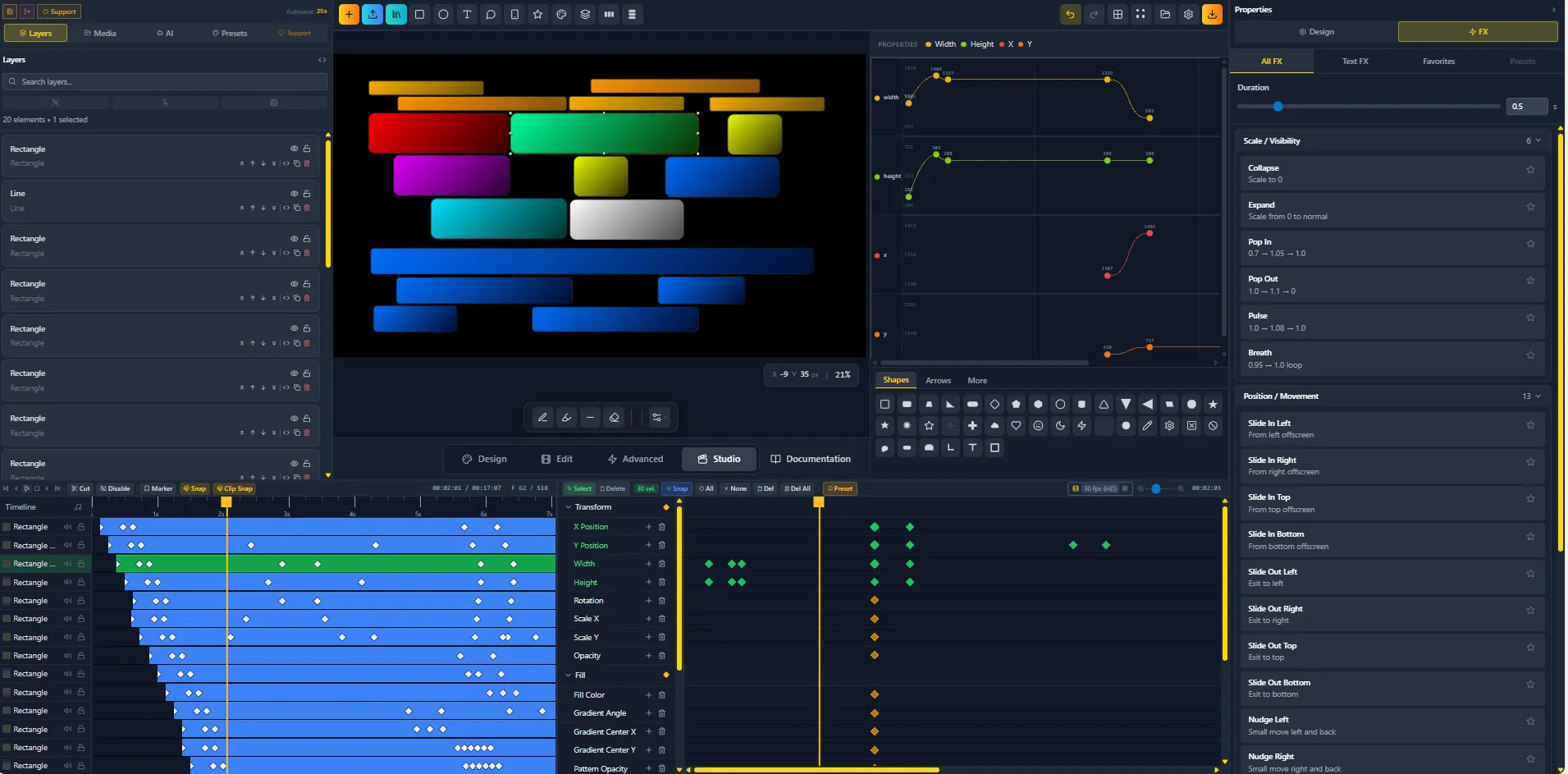
Three harnesses, 24 assertions. They run in about a second and they run anywhere.
The part that separates it out
The test for “is this the right frame at this time” does not need a frame. It needs a list of timestamps and a time, and it needs to tell you which timestamp wins. That is a function you can call ten thousand times in a loop.
Same for scheduling. Given a clip that starts at some point, a playhead parked somewhere inside it, and a rate, where in the buffer do you begin? That is one expression. It is also, as it turns out, the thing I had wrong for pitch-shifted clips — pitch shift is a resample, so it changes how fast the buffer is consumed, and the resume offset has to be scaled by that rate. The old code advanced it unscaled.
I did not find that by looking at the app. I found it by writing down what the answer should be and watching the function disagree.
What the harnesses do not cover
Being honest about the boundary matters, because a green test suite is a claim and an overclaim is worse than no claim.
The harnesses prove the arithmetic. They say nothing about whether the
AudioContext actually resumed, whether the decoder emitted, whether the canvas
drew. Those are still eyes-on-the-app problems, and they always will be.
What changed is the ratio. The parts that were subtle and invisible are now proven. The parts that are left are the parts you can actually see — the ones where “it plays” or “it does not” is a fair test.
One thing I would not have guessed
Even with the math correct, the picture has to be shown at the clock reading minus the output latency, not at the raw reading. Audio hardware has a pipeline, and the sound you schedule now is not the sound you hear now. Show the frame at the raw clock and the picture leads the sound by 20 to 200 milliseconds depending on the device.
That is not a bug you find by testing your own function against your own expectation, because your expectation is wrong too. That one needs the world.
More like this, by email
What I am building, what broke, and what it cost. Written from inside FlashFX, sent when there is something worth saying.
No schedule, no filler. Unsubscribe in one click.