A Hundred Commits, and Almost No Decisions
The hardest day I have worked was also the day I decided the least. Those two facts are the same fact, and it took me a hundred commits to see it.
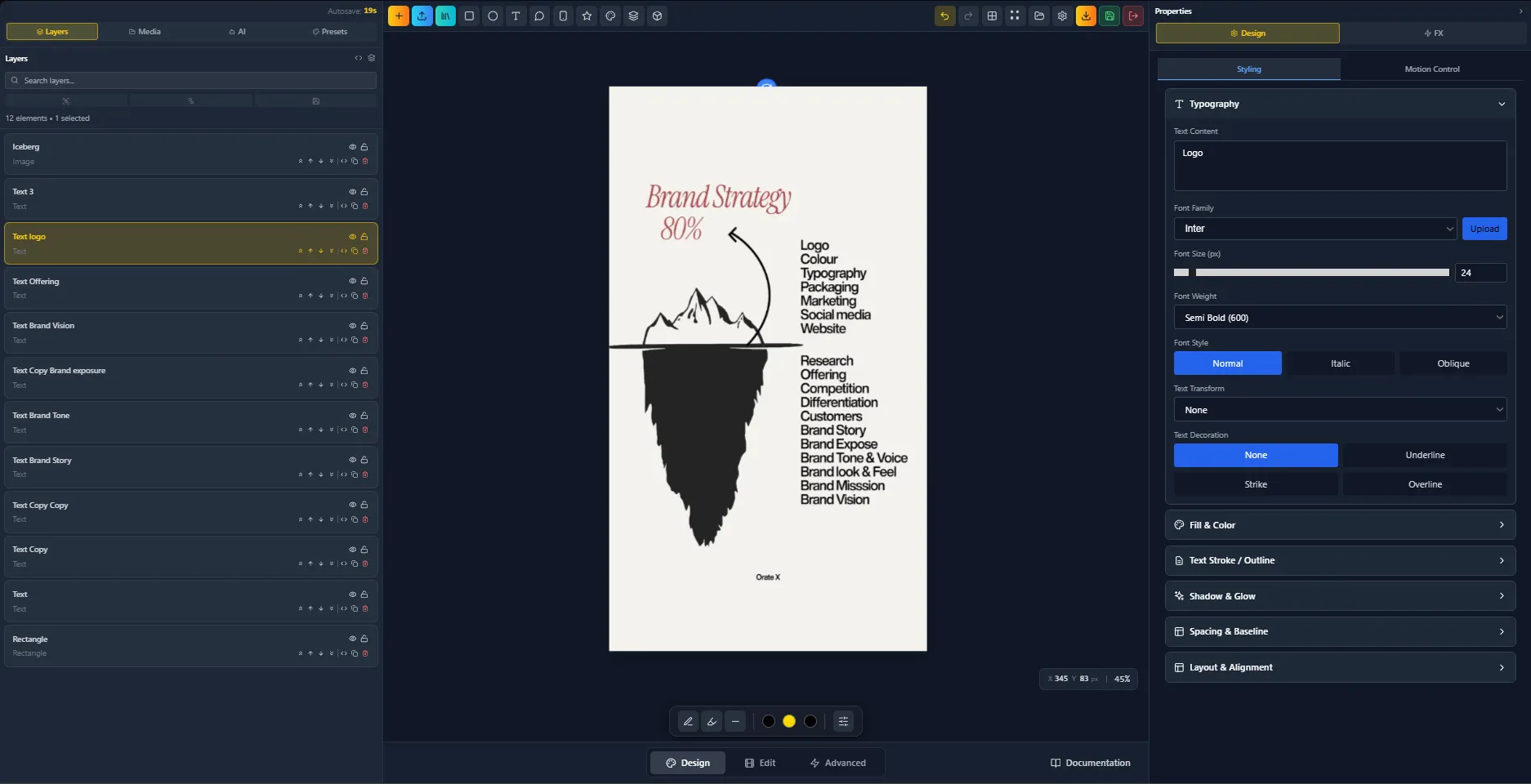
Today FlashFX opened to the public and became a company, which I have written about separately in Launch Day, and the Company Underneath It. This is about the other thing that happened today, which is that I made a hundred commits.
I have never done that before and I do not expect to do it often. It is worth writing down while the details are still exact, because a day like this looks, from the outside, like a story about effort. It is not. The effort was the least interesting input.
The day, measured
Nine milestones shipped: M1 through M10, with M1 landing late the night before and M2 through M10 across today. Eight of the hundred commits are the milestone commits, the ones named in the devlog; the other ninety-odd are the work underneath them.
Eight new verification harnesses: transform HUD, measurement, equal-gap, nudge, fuzzy search, tangent, bend, path cleanup. Typecheck held at 0 errors and lint at its 127 baseline through every single commit.
The work itself was rounded rectangle corners, boolean operations, a transform readout, measurement and equal-gap snapping, nudge and align and distribute, a command palette, power duplicate, editable paths with tangent handles, a bend tool, and anchor deletion with the curve healed across the gap.
Why it was hard, and it was not the hours
Long days are not made hard by their length. Sixteen hours of something you have done before is tiring, not hard.
What made today hard is that nearly every item on that list is geometry with an interface on top, and geometry has a specific property that most work does not: there is always a version that runs, produces output, and is wrong. Deleting an anchor point and reconnecting its neighbours produces a curve. It is just the wrong curve, and it will look approximately correct in every screenshot you take of it. The bend tool applied to the live handles instead of the pre-drag handles still bends. It just compounds, and you will not see that until someone drags slowly.
That is the real cost. Not the difficulty of getting something to work, but the impossibility of trusting that it worked without a separate mechanism that says so.
What actually held the day together
Six things. None of them happened today, which is the point.
1. The decomposition was done before the day started
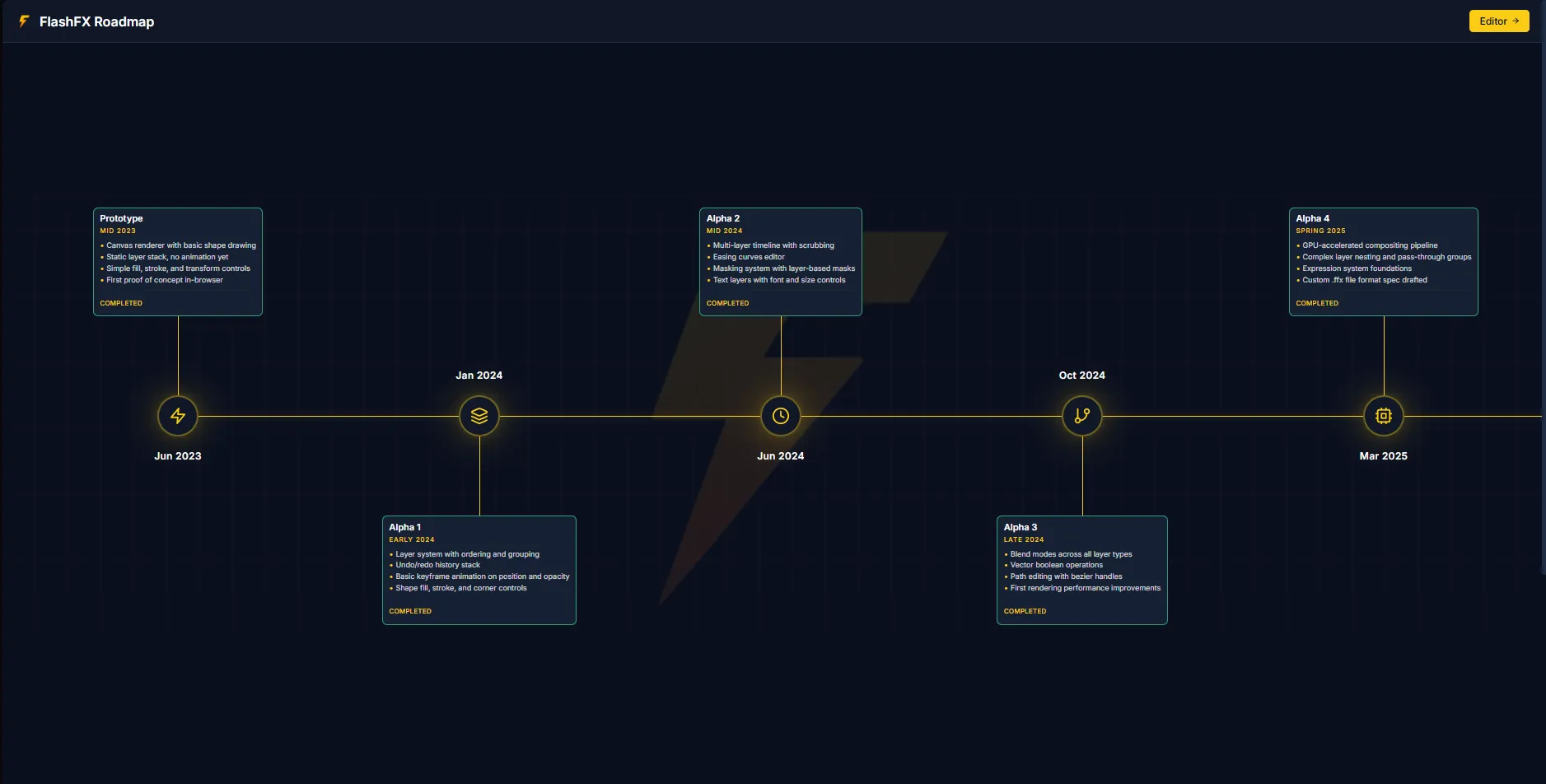
M1 to M10 existed as a list before I opened the editor. At no point in sixteen hours did I face the question “what should I work on now”, because the answer was always the next number.
Deciding what to do next is the single most expensive thing you can ask a tired person to do, and it is the one thing people leave to the moment. Doing it in advance costs an hour once. Doing it live costs you the same hour, in fragments, every time you finish something.
2. A commit is a place you are allowed to stop
A hundred commits means the average unit of work was small enough to close. That is not a statistic about productivity; it is what makes a long day possible at all.
If the only stopping point is “the feature is done”, then every interruption is a loss and you cannot rest without paying for it. If the stopping point is fifteen minutes away, you can stop at any time and the cost is nothing. Long days do not break because you run out of energy. They break because you run out of energy at a moment when stopping would be expensive.
3. Hold a baseline instead of fixing it
Lint sat at 127 through every commit. Not zero. 127.
That number is a decision I made once and did not revisit: those 127 are a different day’s work, and today’s only obligation is to not add a hundred and twenty eighth. A held baseline turns a vague standard (“keep the code clean”) into a single integer you can check in two seconds. Typecheck is the same idea at zero.
Both are worth more at hour fourteen than at hour two, because they are checks that do not require judgment, and judgment is the first thing to go.
4. Automate the verdict, not the work
This is the one I would defend hardest. Eight harnesses today, and they exist for a reason that has nothing to do with correctness in the abstract.
Fatigue does not primarily make you slower. It makes you worse at evaluating your own output, while leaving your confidence about it roughly intact. So the last thing you want at hour twelve is a process where you decide whether the thing is right. You want a process where something else decides and you read the answer.
verify:tangent caught that normalizeAngle(-360) returns -0, which fails
deepEqual against 0 because that comparison runs through Object.is. I would
not have found that by looking. Nobody finds that by looking.
5. Batch what you cannot automate
Some of today cannot be proven in Node at all. Anything driven by pointer input or running on WebGPU needs a browser and, more than that, needs a human to feel whether it is right. Snapping that fights the cursor passes every assertion you can write about it.
So those parts are verified structurally, and each commit carries its own manual-check list to run in the browser later. The alternative is switching to a browser a hundred times, which does not cost you the two minutes it looks like; it costs you the state you were holding.
Separate what can be proven from what has to be felt, prove the first continuously, and queue the second.
6. When you know the cheap version is wrong, it is not a shortcut
The last milestone was deleting an anchor point and healing the curve across the gap. My first implementation passed the new curve through the point where the deleted anchor used to be. That is cheap, it is obvious, and it kinks, because it changes the tangent directions at both ends.
The correct fix is a least squares refit in the shape Schneider described in 1990: hold the two endpoints and their tangent directions fixed, then solve only for the two handle lengths that best fit the original two-curve span. I replaced the cheap version with it before shipping.
The general form: a version you already know is wrong is not a shortcut, it is a second job scheduled for later, and you will do it while remembering less about the problem than you know right now.
What not to take from this
I want to be careful here, because this is the point where a day like today gets turned into a method, and it is not one.
Six weeks ago I was averaging thirteen hours a day on my phone and there were days I did not open the repository. I wrote that down in the previous issue, including the part where I said I am back on track but not recovered, and that March remains my reference point for what full throttle actually feels like.
One day does not change that assessment. A spike is not a trend, and the specific error I would be making is the one I described six weeks ago: rounding up. If I let today stand as evidence that I am back to March, I get to stop paying attention, and not paying attention is the entire mechanism of how the last six weeks happened.
So: today was an outlier, produced by a deadline that could not move, on the one day of the year where the deadline was the whole point. The six things above are the parts that generalise. The sixteen hours are not.
The short version
- Decide what to do before the day, never during it. The cost is the same and you pay it once.
- Make the unit of work small enough to stop inside. Long days end at a bad moment, not at a natural one.
- Hold a baseline rather than chase a standard. 127 is checkable; “clean” is not.
- Automate the verdict. Fatigue takes your judgment before it takes your speed, and it does not take your confidence with it.
- Queue what needs a human, do not interleave it. The switch costs state, not minutes.
- Never ship the version you already know is wrong. It is a second job with worse context.
None of that is about working harder, and I would not have got through today on working harder. It is about arranging things so that a tired person can keep going without needing to be trusted.
More like this, by email
What I am building, what broke, and what it cost. Written from inside FlashFX, sent when there is something worth saying.
No schedule, no filler. Unsubscribe in one click.